Source Forged Equal KF Flange Bellows for Vacuum Systems
Find and compare 30 forged equal kf flange bellows options for industrial vacuum applications. Evaluate stainless steel materials, high vacuum ratings, and customization support to select the right components for your system.
Key considerations
Products List


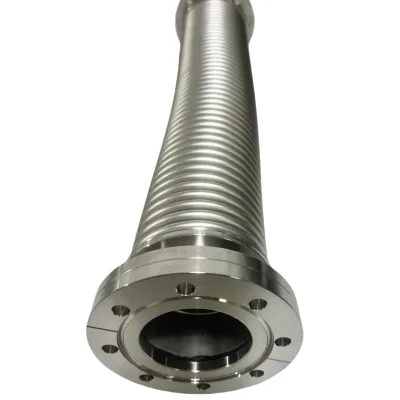
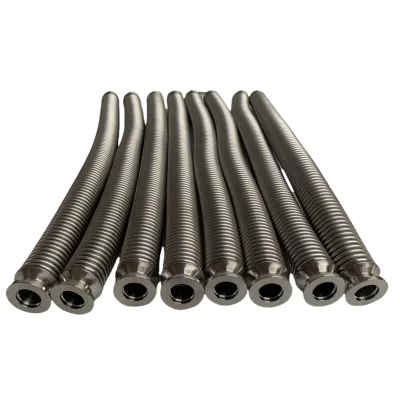
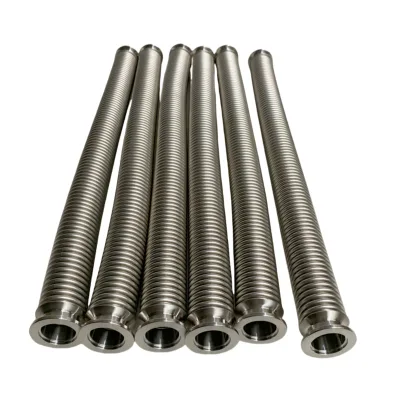


Comprehensive Sourcing Guide
Forged Equal KF Flange Bellows Sourcing Guide
Procuring high-integrity vacuum components requires a precise understanding of the distinction between standard flanges and specialized bellows assemblies. The term "forged equal kf flange bellows" suggests a hybrid component or a specific assembly where a flange is integrated with a flexible bellows element, likely utilizing a forging process for the rigid flange portion to ensure structural integrity under vacuum stress. Buyers must carefully distinguish between simple KF flanges, which are typically cast or machined from bar stock, and complex bellows assemblies that may incorporate flanges for connection. The supplied data indicates a market presence for both KF reducers and vacuum bellows, with materials ranging from stainless steel grades like 304 and 316L to aluminum. Understanding whether the requirement is for a standalone flange, a standalone bellows, or a pre-assembled unit is the first critical step in defining the technical scope and avoiding miscommunication with suppliers.
The observed product landscape includes items labeled as "Kf Reducer Flanges," "Vacuum Flanges," and "Hydroforming Vacuum bellows," indicating that suppliers often list these as separate categories rather than combined units. For instance, one listing specifies a model "KF25XA" with a flange size range of Kf10 to Kf50, while another highlights "Hydroforming Vacuum bellows" with a length of 250mm-1000mm. This separation implies that a "forged equal kf flange bellows" might be a custom configuration where a forged flange is welded or bonded to a hydroformed bellows. Buyers should verify if the supplier offers this specific integration or if they need to source the flange and bellows separately and perform the assembly in-house. The presence of "Equal" in the keyword suggests a straight-through connection without reduction, which contrasts with the "Reducer" flanges also observed in the market, necessitating clear specification of the bore diameter consistency.
Product Scope and Observed Listing Signals
The market signals reveal a diverse range of vacuum components, with prices observed between $0.1 and $565 USD, reflecting the variability from simple flanges to complex, high-vacuum bellows assemblies. The minimum order quantities (MOQ) range from 1 to 5000 units, indicating that suppliers cater to both prototype development and large-scale industrial production. High-vacuum performance is a key differentiator, with some products claiming a vacuum range from 760 Torr down to 1 x 10^-8 Torr. This wide range suggests that not all listed "KF" components are suitable for ultra-high vacuum (UHV) applications. Buyers must correlate their specific vacuum requirements with the product claims, noting that "High Vacuum" is explicitly mentioned as an attribute for some items, while others may be rated for rough or medium vacuum only.
Material selection is another critical signal, with stainless steel (S.S. 304/L, 316/L) and aluminum being the primary materials observed. The "Forged" manufacturing method is explicitly listed for some products, which generally offers superior mechanical properties and fatigue resistance compared to cast parts, making it ideal for high-pressure or high-cycle applications. However, the data also shows "Casting" as a manufacturing way for other flange types. For a "forged" component, buyers should verify that the forging process is applied to the flange portion, while the bellows portion may be hydroformed or expanded from tube. The "Equal" shape attribute suggests a uniform cross-section, which is typical for straight-through connections, but buyers must confirm that the flange face and bore are truly equal in diameter to ensure proper gasket seating and flow characteristics.
Technical Specifications to Verify
Verifying the flange size and connection type is paramount, as the KF (Klein Flange) standard is widely used but requires precise matching of the clamp and gasket. The observed flange sizes range from Kf10 to Kf50, with specific models like KF25/16 and KF25XA noted. Buyers must ensure that the "Equal" designation means the inner diameter of the flange matches the bellows bore, preventing flow restriction or turbulence. The connection type is specified as "Flanged" with a "Flanges" structure, and the standard is cited as "DIN," which aligns with the ISO 2861 standard for KF flanges. It is crucial to confirm that the flange face is flat and perpendicular to the bore, as any deviation can lead to vacuum leaks. Additionally, the "Welding Flange" type suggests that the flange is designed to be welded to the bellows or pipe, requiring verification of the weld preparation and material compatibility.
The bellows specifications, such as length and material, must be cross-referenced with the flange dimensions. The observed bellows lengths range from 250mm to 1000mm, and the braid material is specified as SS304. If the component is a "Hydroforming Vacuum bellows," the manufacturing process affects the fatigue life and pressure rating. Buyers should verify the number of convolutions and the material thickness, as these factors determine the axial and lateral flexibility. The "Balanced" attribute suggests that the bellows may be designed to cancel out pressure thrust forces, which is important for high-pressure applications. Furthermore, the "High-Speed Mechanical Seal" and "High Temperature Mechanical Seal" attributes observed in some listings may not apply to standard KF bellows, so buyers must clarify if the component includes any sealing elements beyond the standard O-ring or gasket.
Compliance and Safety Documentation
Compliance with international standards is essential for vacuum system integrity, with "DIN" and "ISO" standards explicitly mentioned in the product data. The "Standard" attribute is listed as "DIN" for some flanges, which typically refers to DIN 28403 for KF flanges. Buyers should request documentation confirming that the flanges meet the dimensional tolerances specified in ISO 2861, which is the international equivalent. The "SGS, ISO" standard attribute suggests that some suppliers may have third-party verification or quality management systems in place. However, buyers must verify if the ISO certification applies to the manufacturing process or the final product inspection. For high-vacuum applications, outgassing rates are critical, and buyers should request material certificates that confirm the low-outgassing properties of the stainless steel or aluminum used.
Safety and pressure ratings are also key documentation requirements, especially if the components are used in systems with positive pressure or vacuum cycles. The "High Pressure" performance attribute and "High Pressure Mechanical Seals" observed in some listings indicate that certain products are rated for significant pressure differentials. Buyers must obtain the maximum allowable working pressure (MAWP) and burst pressure data for both the flange and the bellows. The "1 Year" warranty offered by some suppliers provides a baseline for quality assurance, but buyers should clarify the terms of the warranty, including coverage for material defects and workmanship. Additionally, if the components are used in industries with specific regulatory requirements, such as semiconductor or pharmaceutical manufacturing, buyers should verify if the suppliers can provide additional compliance documentation, such as cleanroom compatibility or particle count data.
Cost Drivers and Commercial Terms
The cost of forged equal KF flange bellows is influenced by several factors, including material grade, manufacturing complexity, and order volume. Stainless steel grades 304 and 316L are more expensive than aluminum, and the forging process adds to the cost compared to casting. The observed price range of $0.1 to $565 USD reflects this variability, with higher prices likely corresponding to larger sizes, custom lengths, or UHV-rated components. Buyers should expect higher unit costs for smaller MOQs, as the MOQ range of 1 to 5000 units suggests economies of scale. Customization is available, as indicated by the "Customization: Available" and "OEM, ODM" attributes, but this may incur additional tooling or setup fees.
Commercial terms such as packing and shipping also impact the total cost of ownership. The observed packing methods include "Plastic Vacuum Bag, Paper Carton or Wooden Case," "Standard Seaworthy Package," and "Standard Poly Wood Boxes." For vacuum components, proper packaging is critical to prevent contamination and damage during transit. Buyers should ensure that the packaging is suitable for the shipping method and destination, especially for international orders. The "1 Year" warranty is a standard offering, but buyers should negotiate extended warranty periods or service level agreements for critical applications. Additionally, the "Samples: Accept" attribute indicates that suppliers are willing to provide samples for testing, which can help validate quality before committing to a large order, although sample costs and lead times should be clarified upfront.
Supplier Qualification and Quality Control
Supplier qualification should focus on manufacturing capabilities and quality management systems. The "Forged" and "Hydroforming" manufacturing methods suggest that suppliers have specialized equipment for these processes. Buyers should verify the supplier's experience in producing vacuum components, particularly those with high-vacuum ratings. The "Place of Origin: Anhui, China" and "China" origin indicate that most suppliers are based in China, a major hub for vacuum component manufacturing. Buyers should assess the supplier's production capacity and lead times, especially for custom orders. The "Customized Support: OEM, ODM" attribute suggests that suppliers can accommodate specific design requirements, but buyers should evaluate their engineering support capabilities to ensure that custom designs are feasible and cost-effective.
Quality control procedures are critical for ensuring the performance and reliability of vacuum components. Buyers should request information on the supplier's inspection processes, including dimensional checks, material verification, and vacuum leak testing. The "SGS, ISO" standard attribute suggests that some suppliers may have third-party inspections, but buyers should also conduct their own incoming quality control. For bellows components, fatigue testing and pressure testing are essential to verify durability. Buyers should also assess the supplier's ability to provide traceability for materials and processes, which is important for auditing and regulatory compliance. Establishing a clear communication channel for quality issues and returns is also vital for long-term partnership success.
Long-Term Procurement Checks
Long-term procurement success depends on consistent quality and supply chain stability. Buyers should monitor supplier performance over time, tracking metrics such as defect rates, on-time delivery, and responsiveness to issues. The "1 Year" warranty provides a baseline for quality, but buyers should establish a feedback loop to address any recurring problems. Regular audits of the supplier's quality management system can help ensure that standards are maintained. For custom components, buyers should review design changes and process improvements to ensure that they do not negatively impact performance. Building a relationship with the supplier can also facilitate better pricing and priority treatment for urgent orders.
Supply chain diversification is another important consideration for long-term procurement. While the observed data indicates a concentration of suppliers in China, buyers should consider qualifying alternative suppliers in other regions to mitigate geopolitical or logistical risks. Maintaining a buffer stock of critical components can help protect against supply disruptions. Additionally, buyers should stay informed about industry trends and technological advancements in vacuum component manufacturing, such as new materials or processes that could offer improved performance or cost savings. Regularly reviewing the total cost of ownership, including maintenance and replacement costs, can help optimize procurement strategies and ensure that the selected components continue to meet operational needs.
FAQs
What materials are used for forged equal KF flange bellows?
These products are manufactured from Stainless Steel 304, 316/L, and Aluminium. The specific material selection depends on the required corrosion resistance and vacuum performance for your application.
Can I get customized KF flange bellows with OEM support?
Yes, customized support including OEM and ODM services is available for these vacuum flanges. Buyers can request specific dimensions or modifications to meet unique system requirements.
Which vacuum range do these KF flanges support?
The vacuum range spans from 760 Torr down to 1 X 10⁻⁸ Torr for high vacuum applications. This wide range ensures suitability for various industrial vacuum system needs.
How are these flanges packed for shipping?
Products are packed in plastic vacuum bags, paper cartons, or wooden cases depending on the order. Standard seaworthy packaging is also used to ensure safe transport.
What is the warranty period for these vacuum flanges?
A one-year warranty is provided for the vacuum flange products. This coverage applies to manufacturing defects and ensures reliability for the buyer during the initial usage period.
Which standards do these flanges comply with?
The products comply with DIN standards and are manufactured according to specific size requirements. Some items also meet SGS and ISO standards for quality assurance.
Can I order samples of these KF flanges?
Samples are accepted for these vacuum flange products before placing a bulk order. This allows buyers to verify quality and specifications prior to committing to larger quantities.